
Valuing Freedom Over High Levels of Access Control
Addressing the vulnerability of soft targets and the elements of static/inherent risk, this piece explores the question, “How do we best protect environments with inherently high levels of exposure while resisting equal levels of access control?”
Valuing Freedom over High Levels of Access Control
By Anthony Louis Gentile
The recent attacks on two luxury hotels in Mumbai, India have drawn attention again to the fact that securing soft targets continues to be a top priority for security professionals as well as law enforcement. Soft targets by definition are unarmed, undefended targets where minimal levels (if any) of access control measures are utilized. Venues such as hotels, educational facilities, shopping malls, movie theaters, and sports arenas (to name a few) are locations which will continue to give the advantage to those individuals set on instilling fear in the general public. Terrorists now seek to strike at soft targets which are relatively unprotected against terrorist attacks. These targets usually display traits which demonstrate strong symbolic value; have an economic or political impact and visibility. Attacks against them are almost certain to bring as many fatalities and as much notoriety as possible.
These locations remain a significant concern as they are vulnerable not only to organized acts of terror but also to those who may feel they are victims of some sort of perceived injustice. Horrific events such as those at Virginia Tech, Northern Illinois University and the mall shooting at Tinley Park are reminders that securing similar type settings is almost an impossible task. Not to suggest that mall security or campus police were not diligent in their jobs rather that implementation of more stringent forms of access control at these locations prior to recent events would have been impossible to sell. The Trolley Square mall in Salt Lake City (February 2008) achieved undesired publicity when a lone gunman shot nine people, killing five and wounding
four. Shootings of this type should underscore to those providing services and widespread public access, the absolute necessity of providing the best, state of the art security. These facilities are perceived by the public as either fun places or as places where temporary activities occur. Any interference arising from heavy handed security measures would clearly drive away their customers or make their services unattractive. We are a society that values our freedom with a sense of entitlement towards that liberty. Generally, any suggestion at restricting that freedom would be confronted with significant objection; hence the dilemma facing protection professionals in today’s society.
It is difficult to integrate traditional security techniques, access control, technology and an effective security force while simultaneously preserving a sense of freedom. To do so without infringing on the public’s use or enjoyment is even more of a challenge. Security can only be increased if the challenge of offsetting threats against soft targets can be meet with reasonable measures.
Fortunately, there has never been a terrorist attack on a soft target here in the United States. That’s the good news; the bad news is, if an attack on a soft target were ever to occur the psychological impact would be disastrous. For the first time, every American, wherever he or she lived, would feel personally threaten. A suicide bombing in the New York City subway system or at a major shopping center in Los Angeles would instill such fear in our society that it would bring our country to its knees. Adding to this appeal is the fact that preciously little can be done to prevent such a catastrophic event in a society like ours which values personal liberty so highly.
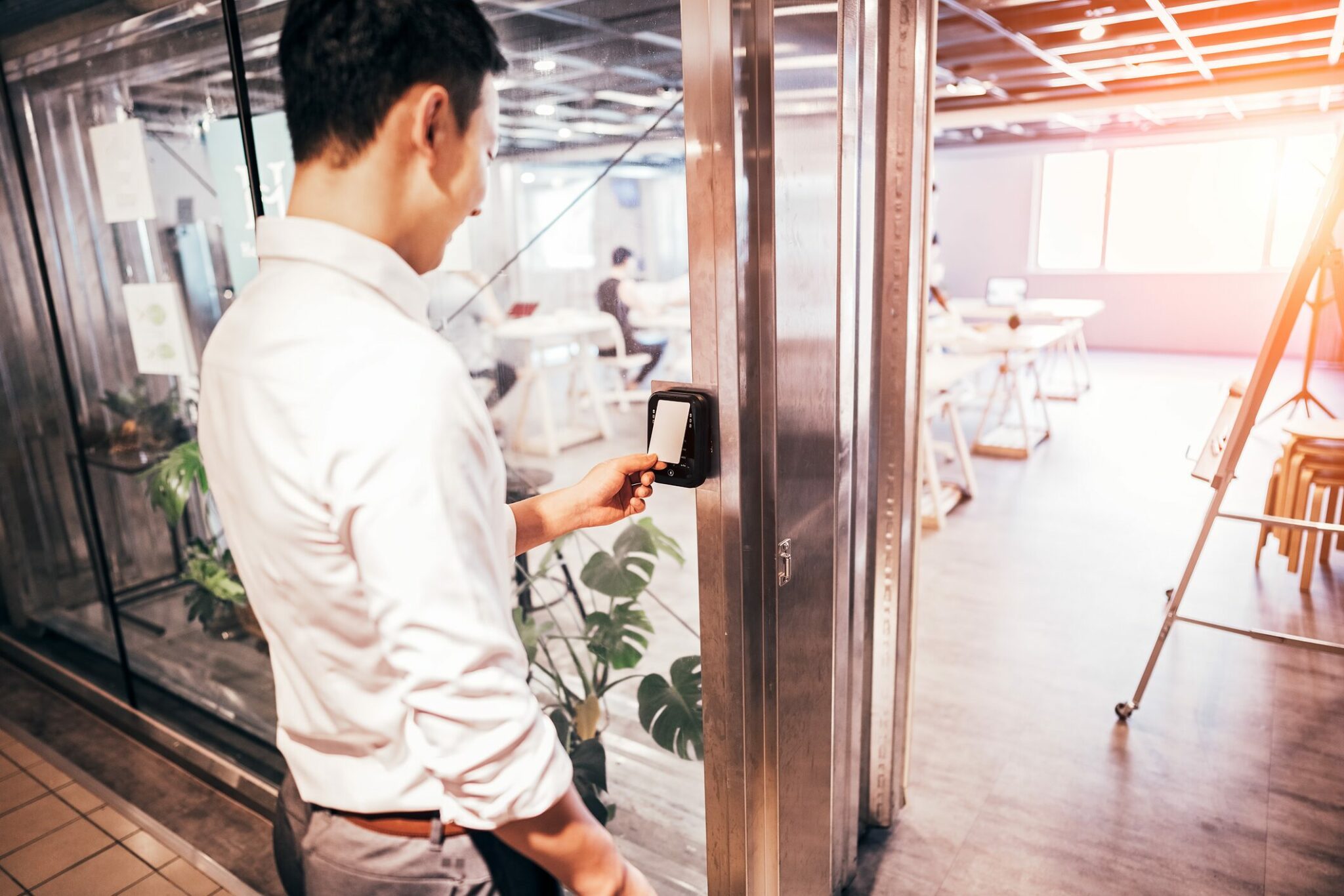
Access control will always be security’s number one task as our daily mission is the protection of people and property irrespective of who the client might be. But access control is reduced in most commercial and educational facilities as they cannot be open for business while closed to the general public as a steady stream of outsiders, from customers to students to service personnel, is essential to its economic health. Unlike high profile venues where target hardening is preferred, most campus and commercial settings are not. So how do we best protect environments which lend themselves to a high level of exposure while resisting equal levels of access control? Many school districts across the country have re-examined their safety practices to better prepare staff and students against acts of terror by organized groups or a few desperate students. Evacuation plans and campus alert systems are now widely used. Additionally some educational facilities have banned the wearing of certain clothing to school such as trench coats or garments that suggest violence. Some schools have become very aggressive and are now utilizing bio-metrics as a form of access control. But there continues to be a fine line between the perception of caution and control that all security and safety professionals will struggle with as a middle ground of polices, which are deemed fair and practical, are defined.
Within any building, regardless of its function, no matter its location there is a need to protect against the internal threat as well as the potential intruder. A certain level of access control must provide some protection against the free movement of employees, customers and students or others bent on creating a serious threat to life and property. You cannot overemphasize that such a program must be implemented without in any way interfering with the orderly and efficient
operation of the facility to be protected. It must not be obtrusive, yet it must provide a predetermined level of protection against a criminal attack from outside as well as within.
There are several questions that will need to be addressed as we consider certain levels of access control. “What’s best for this particular environment? What protective measures are available? Who provides them? Who is responsible for planning and executing these procedures? Where do the roles of private security and law enforcement overlap and where do they have autonomy? What are the particular hazards for which private security is now held responsible? And how and by whom will determine that threats are sufficient to justify the adoption of protective procedures?
In most cases a commercial environment is more likely to have a wide variety of tenants with an equally wide range of security needs. Often, this will also include shops and restaurant facilities open to the public. This requires that the commercial building’s owners and manager’s either create a single security program that meets all tenant needs or allow tenants to deal individually with security needs. When the entire building is occupied by a single corporate tenant, the level of security can be decided by that entity and a uniformed policy applied.
Essentially the degree of risk that management, tenants and the general public interacting in commercial or residential properties are willing to bare will determine the particular level of access control in that environment. We define risk as the possibility of suffering harm or loss with a known or foreseeable threat to an organization, its people and or property. I believe there are two types of risk that are applicable in setting described earlier: Static Risk, which is constant
and unchanging and often found at high profile venues and Inherent Risk, which is unavoidable because of the nature of the business. Locations such as ballparks, subway systems and critical infrastructure would be considered locations with inherent risk. Although the level of risk associated with a particular setting might never change, the probability of a tragic event can be mitigated with the help of the general public.
Our society must be charged with the responsibility of diligence and awareness in those settings which are absent of mid to high levels of access control. In addition, communicating to security personnel or local law enforcement when something does not seem right is vital to the safety of others. The days of social apathy are over. Many law enforcement agencies across the nation have adapted a “see something, say something” program allowing the general public to report anything that seems suspicious or just out of place. This can also be directly related to “standard of care” in that we must all look out for each other. Proper care must be exercised in any and all public environments which might be susceptible to an act of terror. Social awareness can and should become an integral part of any comprehensive public or private safety plan.
Anthony Louis Gentile currently serves as the President of ISS Security Services in the United States; a division of global parent company, ISS Facility Services. He presides over the organization’s Global Security Steering Committee, providing oversight of the operations in 23 countries. He has earned a Bachelor of Science from John Jay College, a Masters degree in Public Administration, and is currently a Ph.D. candidate in the field of Criminal Justice at John Jay College. Mr. Gentile holds the position of Senior Adjunct Professor with the Department of Protection Management at John Jay College. Mr. Gentile can be reached at anthony.gentile@us.issworld.com.