
Top 3 Insights From Our 2026 AI & Digitalization in Facilities Management Report, FM Edition
Explore three key trends shaping facilities management in 2026, from growing AI adoption to a stronger focus on energy performance. The findings reveal how facilities teams are navigating data integration, aging infrastructure, budget pressures and the growing demand for smarter building operations.


Highlights
- 67% of facilities teams are already using Al •
- 61% of facilities teams plan to expand AI use as they adopt technology to maintain performance amid labor shortages, budget constraints and aging infrastructure • Energy optimization is the top current and planned use case for AI, and 22% of FMs say it is where AI has the greatest long-term
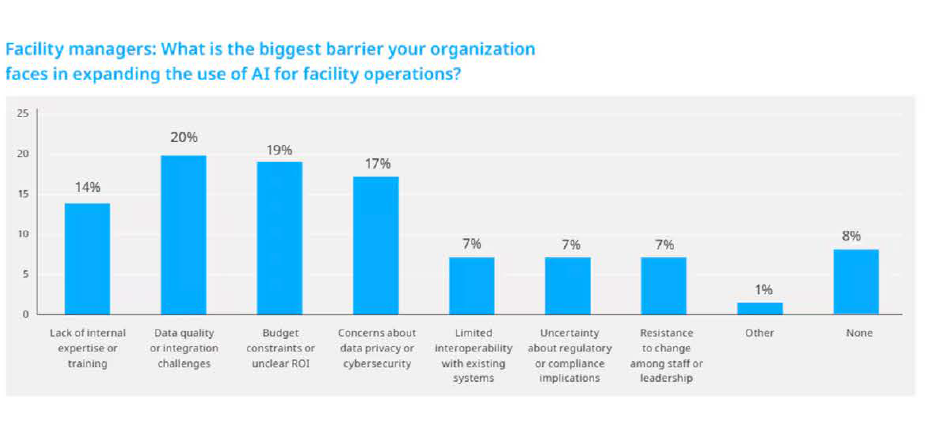
potential • Data quality and integration challenges are the top barrier to expanding the use of AI, cited by 20% of FMs
The role of facilities managers is evolving as the digitalization of buildings expands both the scope of responsibilities and the expertise required. The convergence of operational technology (OT) and information technology (IT) combined with the AI boom presents FMs with both opportunities and challenges. On one hand, facilities are becoming increasingly complex with FMs being asked to operate and maintain them with limited resources and in the face of growing stakeholder expectations. On the other; those heightened expectations stem from a newfound appreciation of the impact facilities have on organizational goals -elevating the role of FMs and the importance of their work.
To better understand how FMs are addressing these challenges and seizing the opportunity with AI and other solutions, we recently surveyed 260 U.S.-based facilities managers (FMs). These FMs represented organizations with more than 200 employees in the finance, government, healthcare, higher education, manufacturing, pharma, real estate and technology sectors.
Here are three key findings from the survey:
1. Energy performance emerges as the top priority for facilities teams
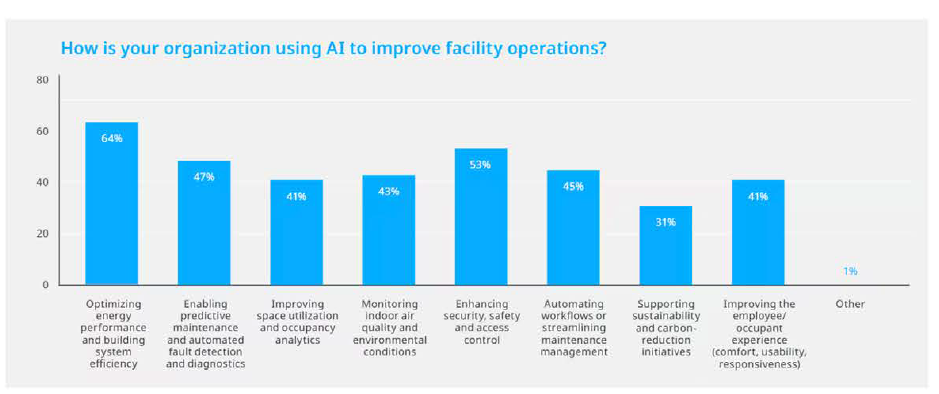
Rising energy costs are putting sustained pressure on facilities teams. This has elevated energy performance from a technical concern to a core operational and financial priority. In fact, our survey shows rising energy costs are the #1 challenge impacting the ability of FMs to manage their facilities effectively
This issue has already translated into technology investment:
- Tracking, optimizing and controlling energy use is already the top current use case for AI and smart building solutions
At the same time, many FMs are looking for even more insights into -and control over -energy performance.
- 20% of FMs say energy use and efficiency is the area where they want more data and insight -the top response
That need is influencing future investment priorities -planned use case for AI.
energy optimization ranked as the most common planned use case for facilities technologies in the next year. It's also the top
- This emphasis on energy also reflects how facilities leaders view the future role of AI:
- 22% of FMs say optimizing energy performance is where AI has the greatest long-term potential -by far the leading response
It's clear that getting a handle on energy performance is -and will continue to be -a central driver of digitalization in facilities. By turning energy performance into a measurable, manageable lever, facilities teams can reduce costs while contributing more directly to broader business and sustainability goals.
2. AI adoption is high, but data quality and integration challenges are limiting its impact
Artificial intelligence has become a standard tool for improving efficiency, reducing downtime and enhancing visibility into building performance
- 67% of FM respondents are already using AI to improve facility operations
- 61% plan to expand the use of Al in the next year
- While resistance to change has largely disappeared as a headwind to AI adoption, new obstacles have emerged
- 20% of FMs cited data quality or integration challenges as the biggest barrier to expanding AI use, followed by budget constraints (19%) and concerns about data privacy or cybersecurity (17%)
- As buildings become more connected, the ability to integrate systems, standardize data and ensure secure operations will play a critical role in determining the success of AI-driven facilities strategies.
Ł
Download the 2026 Al & Digitalization in Facilities Management Report for FMs
4:»
- Budget constraints and aging infrastructure are increasing operational pressure Aging infrastructure and deferred maintenance are putting more pressure on facilities teams, but the challenge is not simply a lack of budget. FMs are being asked to maintain uptime, extend asset life and improve performance in increasingly complex buildings -making smarter prioritization more important than ever.
- When asked to pinpoint the biggest threats to maintaining equipment performance and uptime, 20% of FMs cite budget limitations and 18% cite aging infrastructure -the
- second and third most common responses, after cyberattack risk
- What's clear is that no single issue dominates. Budget is part of a broader operating environment in which facilities teams are balancing equipment age, rising costs, staffing constraints, cybersecurity risk and growing demand for measurable performance.
- The survey results also suggest that budget is not the primary barrier to AI adoption for most FMs.
- While 19% of FM respondents cite budget constraints as the biggest barrier to expanding AI use, data quality or integration challenges rank slightly higher at 20%
- Failure to prioritize technology investment may prove to be shortsighted; recent studies have shown that the long-term operational and financial benefits of these solutions can outweigh the initial costs
What this means for facilities management strategy
The findings from the 2026 AI & Digitalization in Facilities Management survey of FMs are a snapshot of a pivotal moment for the profession.